
Documented AWC company work
New connections. The wall is still open.
A real AWC sink-wall photo sequence shows why plumbing access, closure and finish restoration need connected scopes.
From All World Construction LLC
Owner: Austin Mitchell About Verify CSLB #1063936 Updated
Project-library example. This page does not claim the work occurred in Torrey Pines or that final closeout is shown.
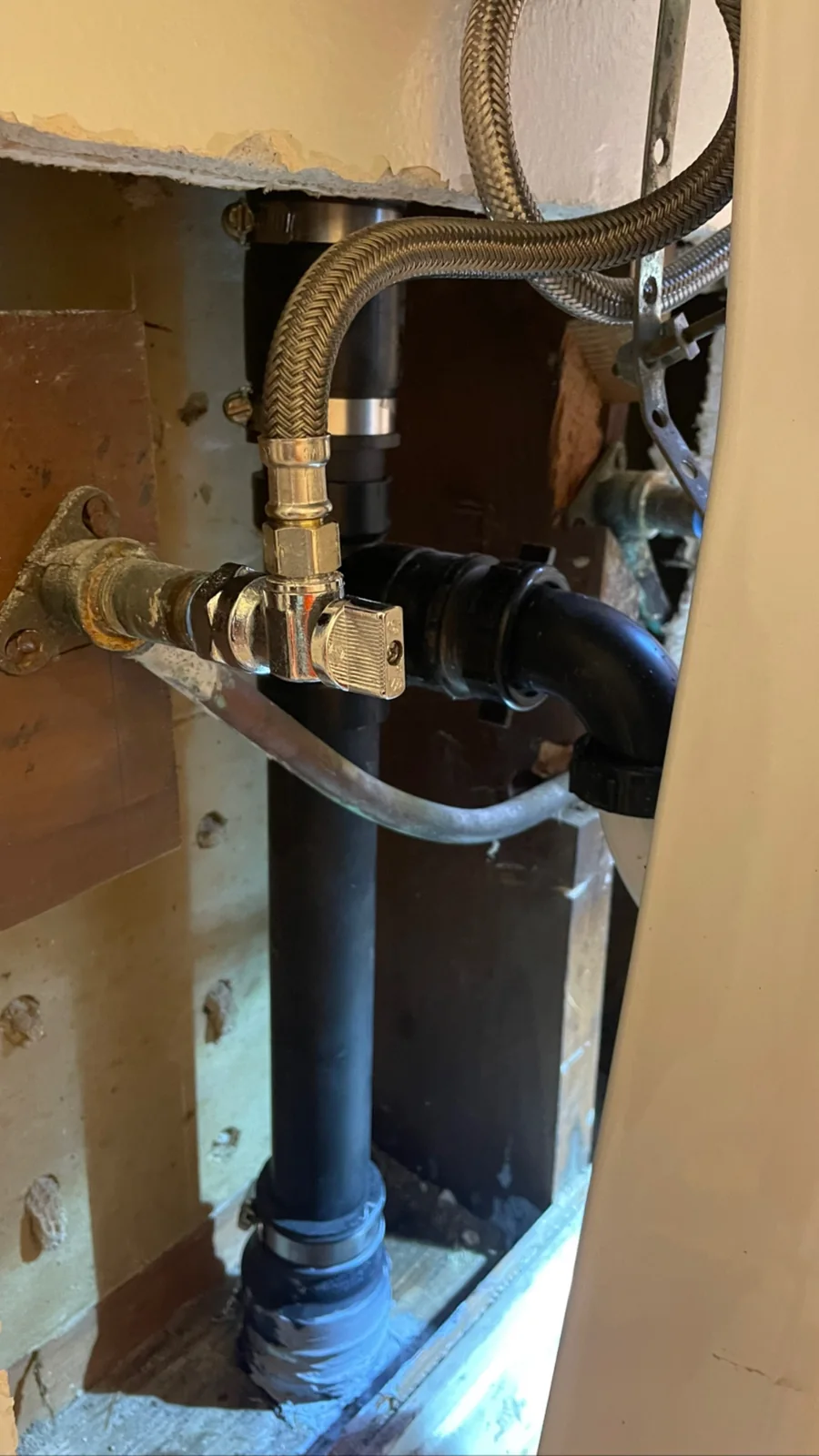
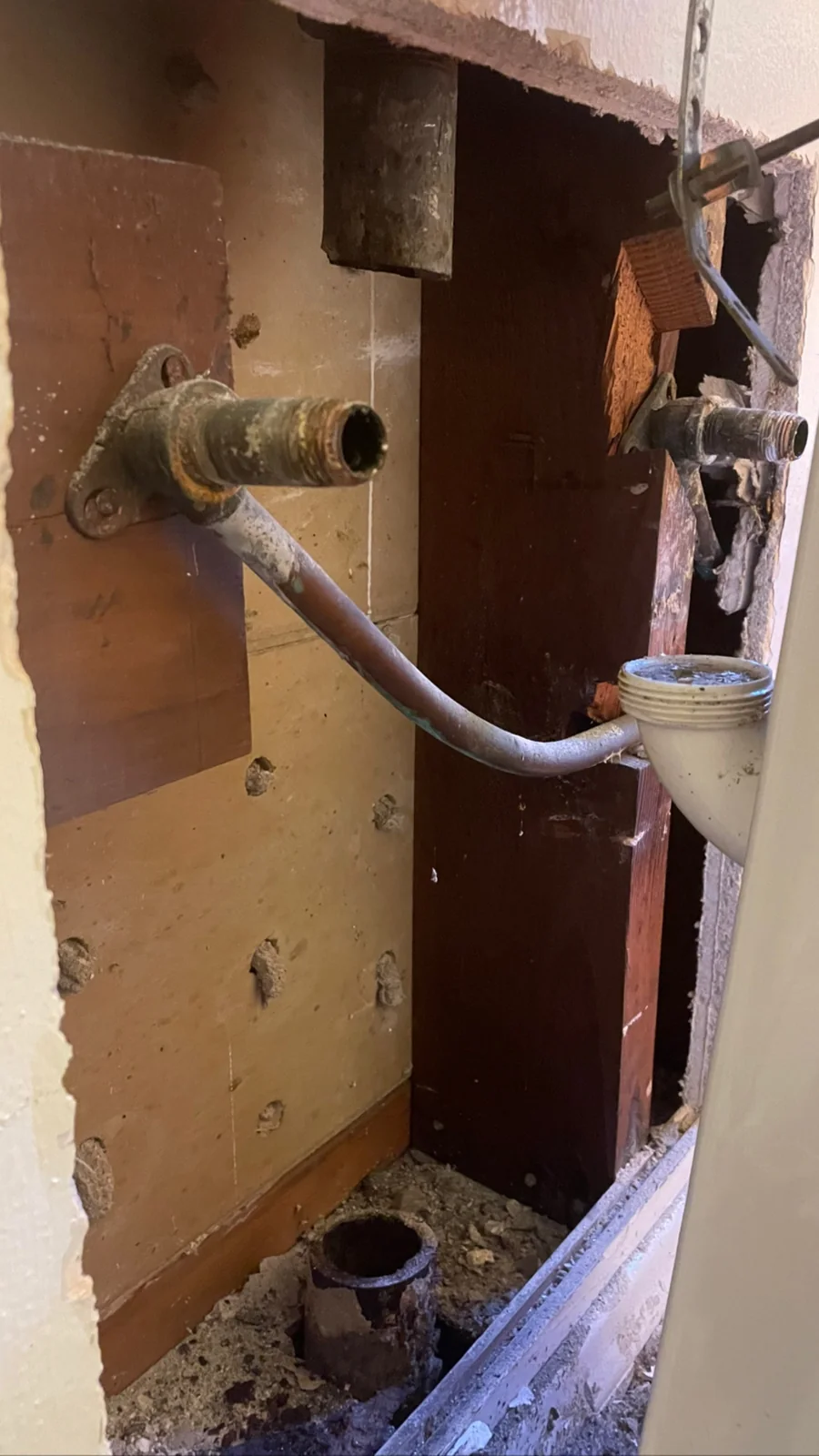
These two AWC project-library photographs show the same sink-wall opening at different work stages. The earlier view exposes existing plumbing components. The later view shows installed drain and supply connections while the wall remains open. That visible difference is useful, but it does not tell the whole story of the room. This example focuses on what should be handed from the plumbing stage to the wall-repair stage.
The opening is part of the repair scope
The exposed wall gives room to reach the plumbing, while the sink and surrounding finishes remain part of the work area. It also leaves a separate restoration task. A proposal should identify who opens the area, how nearby surfaces are protected, and who puts the wall back together.
For another property, the least disruptive practical access route needs review. A close-up of a fitting cannot show the room on the other side, a cabinet that restricts access, or the paint boundary an owner expects. A wide photograph and a short description help make those questions visible before work begins.
Record the piping while it can still be seen
The later photograph records the installed connections before the wall is closed. The matching opening and plumbing positions support a before-and-later-stage comparison. No testing record, inspection result or concealed-condition report accompanies this public photo example.
For your repair, ask what checks the written scope includes and who records the result. A photograph, a test record and a release to close serve different purposes. The required check should be completed by the responsible trade; a good-looking installation photo is not a substitute.
Agree on what releases the wall for closure
The wall-repair crew needs a clear handoff. Confirm that the responsible party has released the plumbing stage, that any required inspection or additional access has been addressed, and that affected materials have been evaluated as appropriate. The photo pair does not establish that those steps occurred on this job.
If opening the wall reveals a different condition or a larger repair area, document the finding and obtain the appropriate approval before expanding the work. Keep the original agreed scope separate from newly discovered work. This protects both the repair sequence and the owner’s understanding of the price.
Name the visible finish boundary
Backing, board repair, joint treatment, texture, primer, paint and trim may belong in the restoration scope, depending on the actual wall. Ask which layers are included, where the repair stops, and whether painting covers a patch, a full wall or another agreed area.
These photographs end with the opening still visible. They do not show a completed wall, customer acceptance, final paint or a long-term result. The useful lesson is to make the remaining work explicit, so an installed fitting is not mistaken for a finished room.
Prepare a clearer request for your property
Send a safe wide view, a close view of the visible symptom, the affected fixtures, when the issue occurs, and any previous repair information. Include whether water is still active, who coordinates access, and which rooms must remain usable. Do not open a wall or enter an unsafe area just to collect a photograph.
If the source, water damage, access or connected trades need field verification, AWC may recommend the $250 Site Evaluation + Written Bid Package. The $250 is credited back if the quoted work is approved within 30 days. Start with the repair condition and the finish you need; AWC can help define the next step.